Saturday, June 28, 2014

Kashmir Log 2

For Kashmir Log 1, click here.

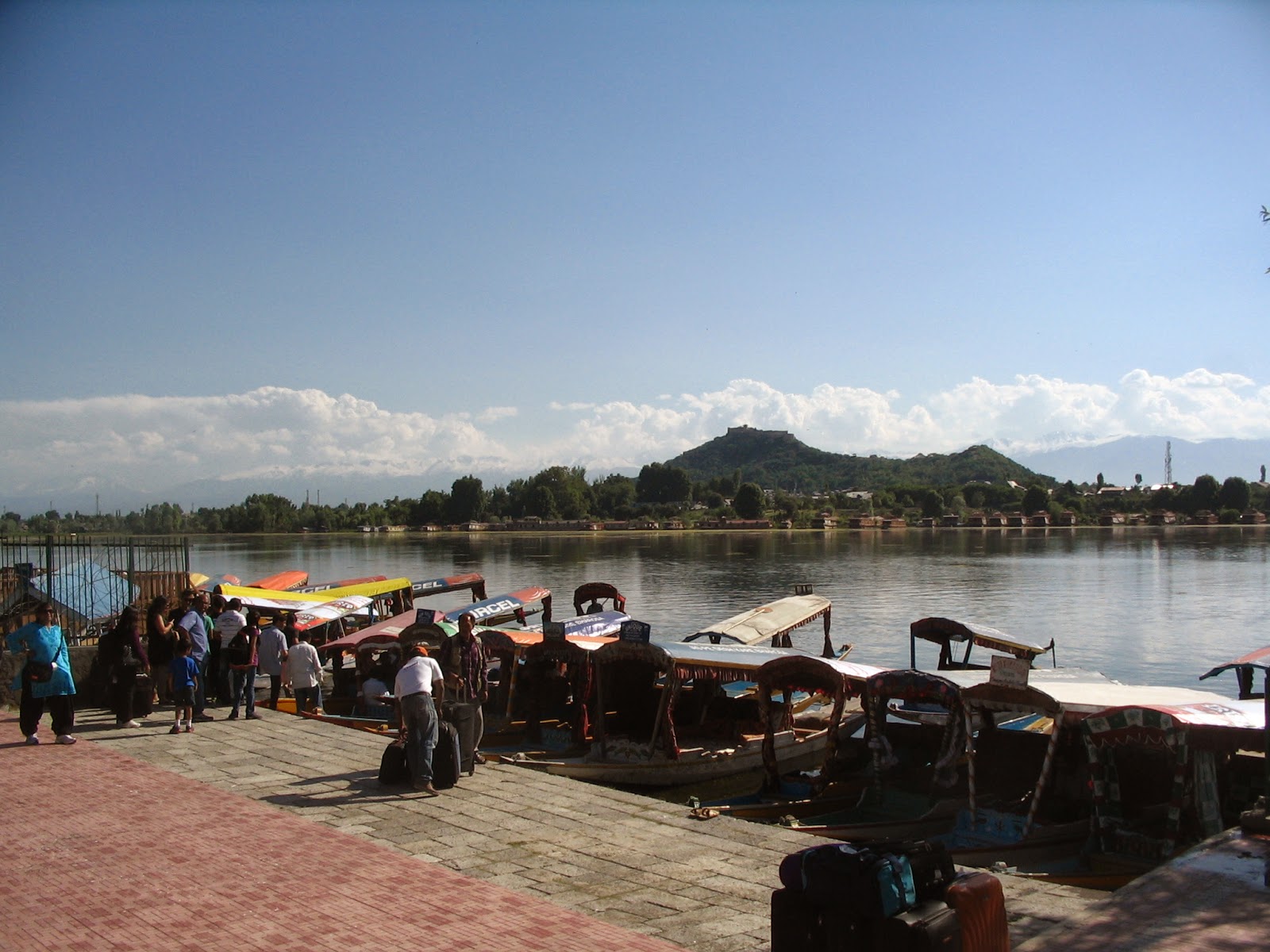
We are on our way to Srinagar from Pahalgam. It is going to be a long day. Big buses such as ours are not allowed to enter the city during daytime. So, at a convenient point, we split into groups and get into the smaller vehicles that are waiting for us. It is a Monday morning and the traffic in the city is heavy. Reaching the hotel takes much longer than expected. After dropping off our bags at the hotel, we head towards Dal Lake for a shikara ride to the Char Chinar island. Traffic crawls at a snail's pace. It is almost midday and very warm. Never thought it could get so hot here!

It is only after I settle in my shikara that I get a respite from the heat. The cool breeze and the gentle blue waters of the lake soothe me. But before I could begin to appreciate this, our shikara is approached by intruders. It is the hawkers again! They attach their shikaras to yours and start negotiating. They go some distance with you, but leave you alone after a while. The lake is unbelievably huge. At places, there are lotus patches with hundreds of lotuses blooming. Some light yellow, some pink/red. It is wonderful floating gently in these shikaras. There's an old world charm to it.

After about 30 minutes, the island of Char Chinar appears at a distance. It is a small isle, with four Chinar trees, one in each corner. But sadly, only two of them are in good shape. Two have dried up, with almost no leaves. The Chinar is a majestic tree, tall and elegant. It is an integral part of Kashmiri culture. One can only imagine how magnificent it must be looking in autumn when its leaves change their colour. The leaves are pretty with a distinct angular shape.

We spend some time at Char Chinar and get back into our shikaras. On our way back, we pass by some floating gardens where vegetables are being grown on layers of weeds that have been collected from the lake. There is a floating market too, housed in boats. We give it a miss as it is getting late. It is interesting to see locals using simple shikaras for their errands. School kids are being taken home in one, while an old couple is going some place in the other. There is a floating post office in a bigger houseboat.

Some time after a latish lunch at our hotel, we visit the Shalimar Bagh. And then the Nishat Bagh. These are exquisitely landscaped Mughal gardens that were laid out in the 17th century. Everything about them is superlatively splendid. The fountains, the lawns, the trees and the flowers. Ah, the flowers! There must be something special about the soil and air in Kashmir. The flowers look very healthy and full of life. And they are huge and abundant. It is a treat to see so many roses in so many different colours, all at one place.

It has been a long and leisurely evening. At dinnertime, we are briefed about the visit to Gulmarg that is coming up tomorrow. It is going to be the "highlight" of this whole trip. Full of anticipation and excitement, I hit the bed. We have to gather in the breakfast area at six in the morning!

---

All of us are ready for breakfast at six. Those who don't want to eat that early get some stuff packed to eat later. We get going at 6:30. It is a nice day. For the first 43 kilometres, the drive takes us on a road that is pretty much flat. We take a break in Tangmarg. Local men here sport long beards and flowing phirans. They look hardy and robust, a quality they acquire because of living in difficult geographical terrain. The next 13 kilometres will take us uphill on a winding road. After a tea break, our leaders advise us to rent gumboots and warm coats from a neighbouring shop. "One never knows what the weather will be like up there", they say. It has started drizzling, lending a dreamy look to the scenery.  Armed with boots and coats, we get into the bus that starts winding its way towards Gulmarg. The drive is scenic, with very tall pine and fir trees growing densely in the forest. They are numerous, standing so close to one another as if they were jostling for place, their needles encroaching into each other's space.

Gulmarg is one of the most popular tourist destinations in Kashmir and large crowds are expected here. Our buses drop us in the parking lot. From here, one has to walk or ride a pony for about two kilometres to reach the cable car station. Most of us decide to walk. Fortunately, the drizzle has stopped. The crowds seem to be swelling. Our leaders have done online booking for the group. That saves us some time. We get into the queue for the first phase of the cable car ride that will take us to Kongdori, at a height of 10,500 feet. It is a short ride that takes eight to nine minutes. Small huts, sheep, people, grassy slopes...all look magical down there when you are seated inside the small cabin of a cable car, called gondola here. We get out and enjoy  the fascinating views that this location offers.

The second phase takes you to Afarwat, 13,500 feet high. I hear that the Line of Control is only a few kilometres away from there. But sadly, the cable cars in that phase are not operating because of bad weather at the top, an announcement informs us. Hoping that the service will resume, we decide to wait for some time. They run some test cars and start operations after 90 minutes or so. What follows after that is mayhem. Impatient crowds, people pushing one another, angry arguments and fights lead to almost stampede-like conditions. What could have been a rendezvous with Nature at its magnificent best, is marred by crass human behaviour and incompetent handling of the situation by the management. Those of us who do wish to go for the second phase, have to stand in the queue for two hours or more with a hostile crowd. Anyway, I am happy that nothing untoward happened and all are well.

By the time we are back in Tangmarg for "lunch", it is six in the evening! We have one more engagement scheduled for the evening. A visit to the Art and Craft Bazaar on the outskirts of Srinagar. It is a government-run outlet selling authentic Kashmiri stuff at fixed prices. Moreover, a carpet-making demonstration is on the cards. Our group is ushered into the huge hall on the first floor where the walls are lined with plush sofas. As we take our seats, we are welcomed by the genial Mr. Rafiq. He explains the intricacies of carpet-making in very sweet Hindi, tinged with Urdu. He is very polite, suave and knowledgeable. We listen to him spellbound as he holds forth on this art mastered by his illustrious forefathers. "Yeh hunar aapko virasat mein milta hai" (you inherit this skill from your ancestors), he says. As he shows how a carpet is woven knot by knot, we are full of admiration for the tremendous amount of work that goes into its making. The price and quality of a carpet depends on the number of knots per square inch. He unfurls several gorgeous carpets in different sizes to cries of "oohs" and "aahs" from us.

The art of carpet-making came to Kashmir from Persia. Carpets are not made in factories. Skilled craftspersons make them in their own homes. It may take months to make a single piece. A carpet maker has to follow a distinct pattern of knots and colours laid down by an expert, just like a musician follows notations while playing a piece. The final outcome is not known to him until he has completed making it. The designs are mostly floral and include cultural motifs like paisley and Chinar leaf.

"A carpet is for a lifetime", Mr. Rafiq tells us. The silkworm feeds on the leaves of apple trees. The silk yarn is obtained from the saliva it deposits on the surface of the leaves. The speciality of this silk is that the worm does not get killed in the process. Since only natural dyes (extracted from rose petals in this case) are used, the carpets do not get stained even if something spills on them. Once a thread is dyed in a natural dye, it cannot take on any other colour. Any spillage can be washed off at home easily. They do not absorb dust and are fire-resistant. Mr. Rafiq sets fire to a piece of paper and throws it on a carpet. The piece burns completely but does not leave any mark on the carpet. Our host simply dusts off the ash. Even heavy furniture does not make a dent in these carpets. And lastly, he demonstrates the amazing change in the colours of a carpet when it is flipped. This session has been very interesting and enriching. It ends with cups of delicious kahwa served to us on the house.

We return to the hotel, have dinner and retire. Of course, not before listening to the itinerary for tomorrow. We are going to Sonamarg tomorrow!

To be continued.

Wednesday, June 25, 2014

Kashmir Log 1

Our first connect with Kashmir has been through Hindi films. The land has provided a stunning backdrop to numerous film songs. We grew up looking at those wonderful landscapes, which seemed tucked away in some faraway fantasy land. That was then. It doesn't seem to be faraway now. Looking at the snow-capped mountains from the window of my aircraft, I sense a wave of exhilaration sweeping through me. Within minutes, we touch down at Srinagar.

It is a small, very basic airport. Outside, the sun is shining brightly and it is quite warm. We are greeted by our escorts and are soon on our way to the houseboat in Nagin Lake, where we are to spend the first night. But for some mountains in the distance, Srinagar looks like any other town, with shops lining the road on both sides. It did feel special a couple of times when we passed by some water bodies with boats bobbing up and down in them. After a longish ride, it is time to get down. A little walk and we arrive at a lake where dozens of shikaras are waiting to take us to our houseboats. Our luggage efficiently loaded onto the shikaras, we set off happily, taking in the picturesque landscape. We are in Kashmir, at last!

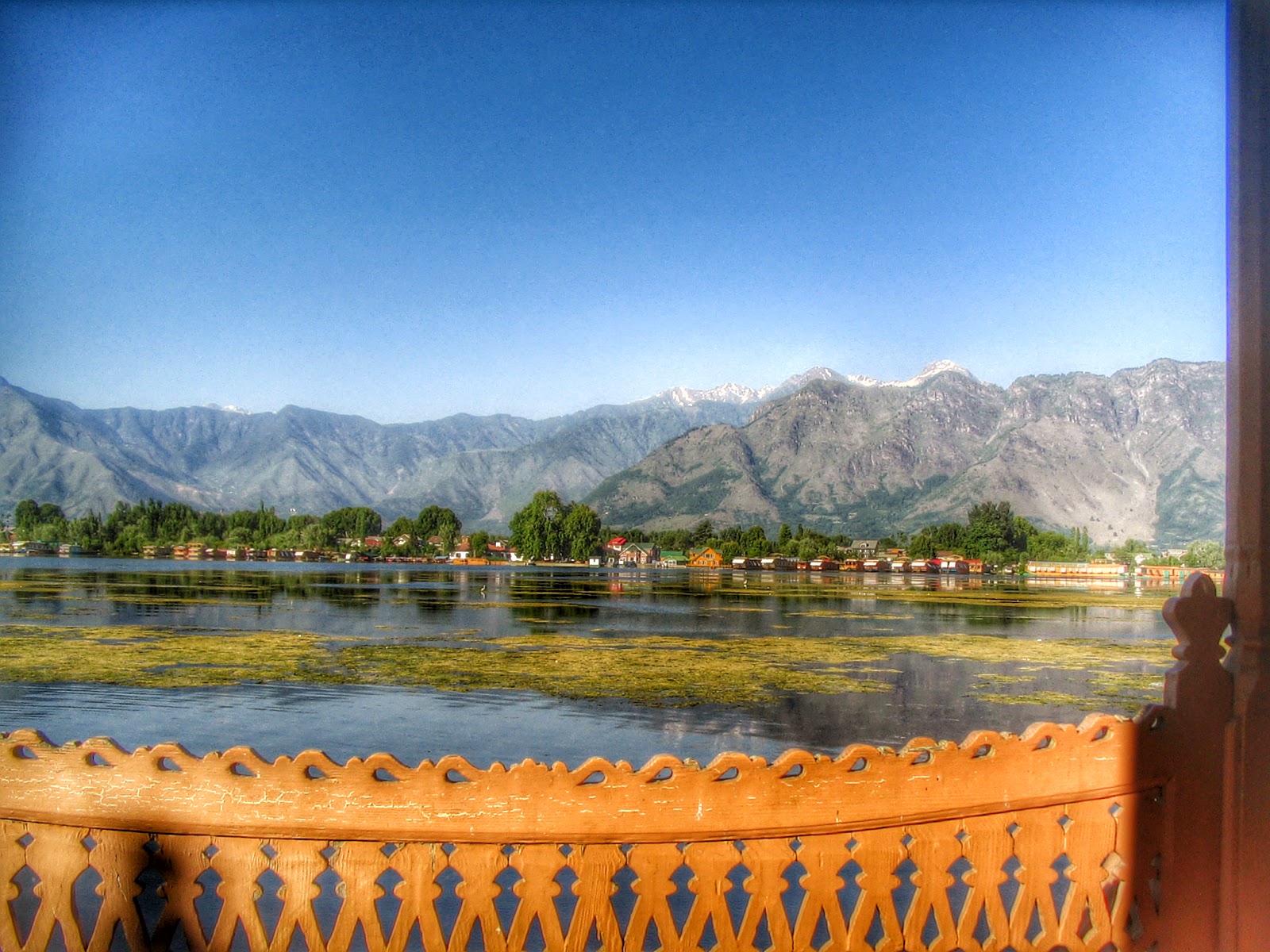
The shikara glides gently on the calm waters of the blue lake. At the other end are moored several houseboats, their wooden bodies looking bright in the afternoon sun. Each houseboat is a spacious three-bedroom house, complete with a lovely dining room, a plush living room, a deck or balcony and a terrace. I am sharing my houseboat with a friendly family from Mumbai. After depositing our bags in our rooms, all of us come out to the deck to enjoy the fantastic view. The waters of the lake look pristine, although at places, there are carpets of weeds on the surface. And there are some lotus patches too. Photographers, masseurs, people selling shawls and embroidered dress materials float by in shikaras looking for prospective customers. Otherwise it is a tranquil afternoon, and the ambience picture perfect with mountains lining the serene lake at the far end. We just sit there and soak in the atmosphere. 

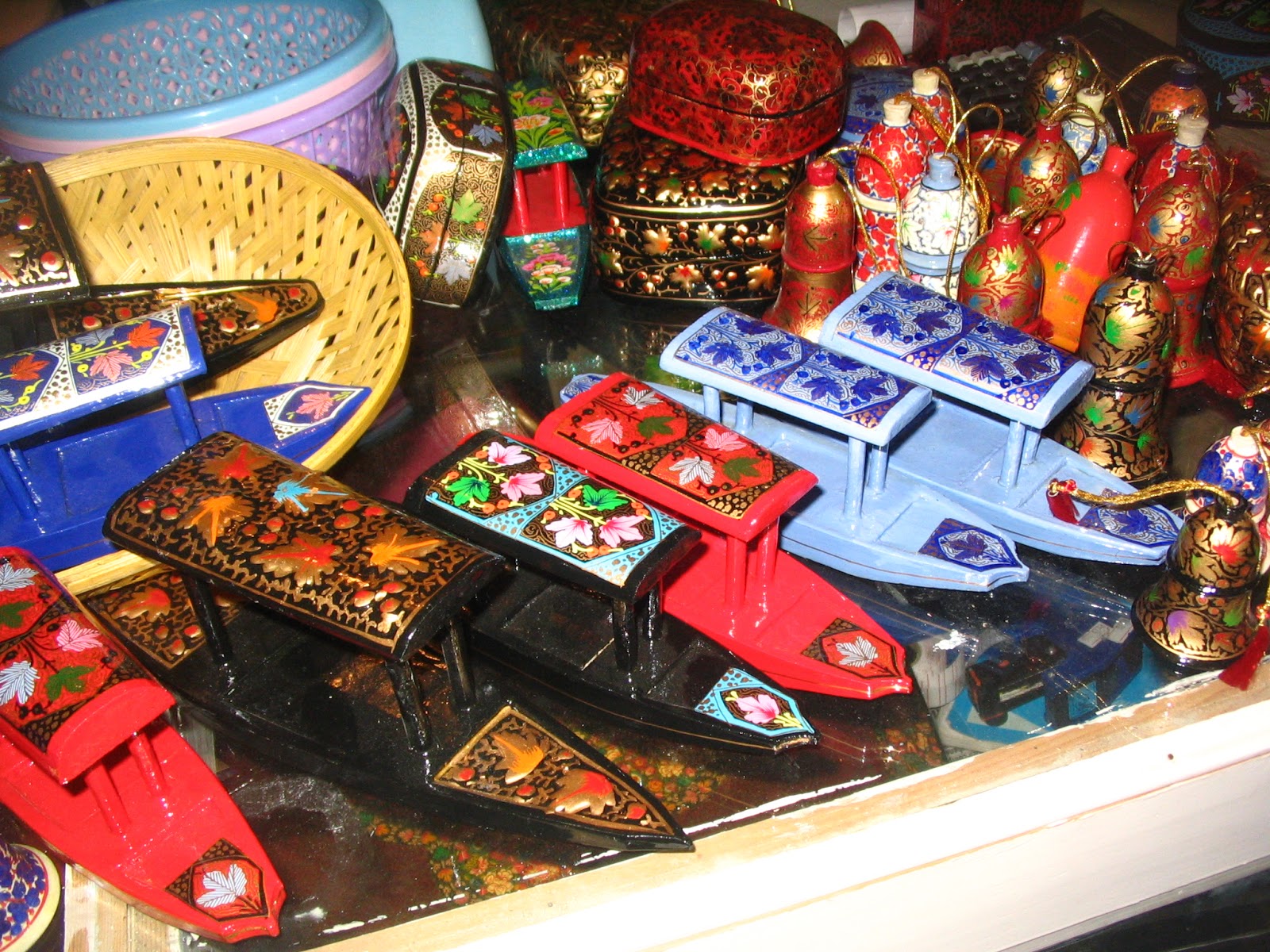
We get up only when it is time to go to the common area, close to the point where we alighted from our shikaras, for an introductory session with other members of our group over tea. It is a nice assembly, with people belonging to different age groups. Introductions done, we walk over to a nearby place selling colourful papier mache products. There are bells, boxes, little shikaras, vases, bangles, key rings and several other things that tourists like to pick up as souvenirs. People in my group start buying things for friends and family back home. I like everything, but am happy to just take pictures. This is only the first day, I tell myself. We get back to the houseboat just in time for dinner. Our leaders brief us about the next day's itinerary. We return to our rooms soon because we have to check out early and leave for Pahalgam at 6:45 in the morning.

The room is comfortable. The bedspreads and curtains are adorned with typical Kashmiri embroidery. The intricately designed wooden ceiling--khatambandh--adds authenticity to the ethnic Kashmiri setting. It is a quiet night outside. The houseboat attendant Irshad, a youth from a nearby village, promises hot water in the bathroom at five in the morning. I fall asleep in no time,as I had woken up at an unearthly hour to catch my flight that morning.

---

Irshad keeps his word. Feeling fresh and rejuvenated after a nice hot bath, I walk to the breakfast area. Our luggage is being assembled in one corner. After a quick breakfast, we get into a largish boat to go across the lake and board the two buses that will take us to Pahalgam, 95 kilometres away. All of us are excited to be in Kashmir and are looking forward to enjoying the scenic beauty of its countryside.

We stop by at a shop selling dry fruits and spices in Lethpora, Pampore in Pulwama district. This region is well-known for its saffron fields. In fact, the back door of the shop opens into a huge saffron field. Unfortunately, this is not the season, and the field is bare. "Come in September if you want to see the flowers!", says the friendly chap who is showing us around. He tells us that in season, the field is covered with violet flowers. They grow on plants that stand no taller than eight to 12 inches. Each flower has three red stigmas that are plucked and dried carefully. This is the prized saffron that is used as an exotic spice in various dishes. Since this is very expensive, some enterprising people come up with fake saffron. Our man gives us tips on how to tell the fake stuff from the real one. "One end of the strand must be broader than the other end. If you put a strand in your mouth, it should taste bitter. And if you put some strands in water, the water should turn yellow, but the strands should retain their original colour, no matter how long they stay in water." Armed with this knowledge, we are now ready to take on the spurious saffron dealers!

My companions throng the counters to get their fill of spices and dry fruits. I am mostly happy to walk around, take pictures and relish the hot kahwa available just outside the shop.

Our next stop is the ancient Avantiswami Temple, a Vaishnava temple built somewhere between 855 and 883 AD. It is also in Pulwama district, located about 30 kilometres from Srinagar on the banks of the lovely river Jhelum.Our knowledgeable guide draws our attention towards the various carvings in stone and explains their significance to us. The appeal of the temple is enhanced by its surroundings-- colourful rose shrubs, stately Chinar trees and mountains in the distance. This location featured in the songs from the well-known 1975 film "Aandhi". Fortified after a snack and tea break, we move on.
 
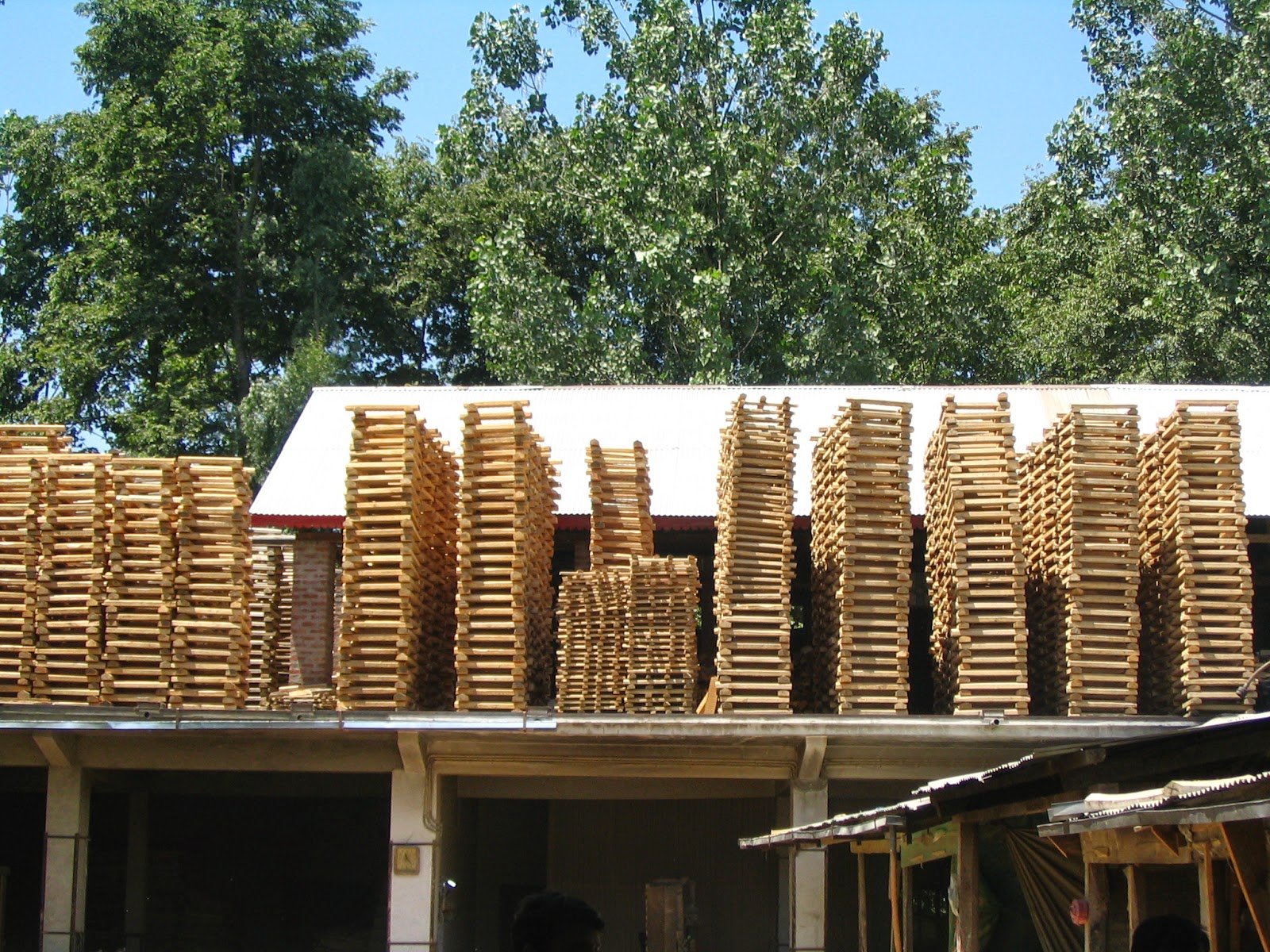
After a while, we see workshops/shops making and selling cricket bats lining both sides of the road. Hundreds of bats are piled in a criss-cross fashion and left on the roofs of the shops to dry. We stop by at a prominent shop. The affable Mr. Mushtaq greets us with a smile. He is dressed smartly in a black pathan suit and a white skull cap. He tells us about the abundance of willow trees in Kashmir and why their wood is best suited to make cricket bats. "It is very tough, shock-resistant and it doesn't get splintered on being hit with a ball at high speed. This wood is found only in England and Kashmir", he says. He is very witty, articulate and ends his sermon with a puzzle that sets all of us thinking. When we fail to come up with an answer, he reveals it with a naughty smile. It WAS quite silly and we disperse, thanking him amidst loud guffaws. Some go to the workshop, and some to the shop to buy an authentic Kashmiri willow bat.

We resume our journey towards Pahalgam. The road is slightly uphill and the vegetation changes. All of us are thrilled to find a gurgling river running parallel to the road. Everybody rushes to the windows of the bus with their cameras. It is the river Lidder. It runs alongside the road all the way up to Pahalgam. In fact, our hotel offers a breathtaking view of the river against the dark mountains in the background.

We check into the hotel and have lunch. After some rest, we are out to explore the lovely hill town. There is a nice park by the river. Some of us venture to touch the gushing water...it is ice cold! It is nice to see many local families enjoying a picnic in the park. God has blessed this land not only with natural beauty, but also with beautiful people. Men look handsome with their sharp noses and trimmed beards, while women look pretty with their kohl-rimmed eyes and stunning faces. And their complexion? Flawless rosy pink! How can so much beauty be concentrated in one place, I wonder.

We are accosted by the ever-present salesmen several times, trying to sell us their wares--shawls, stoles and dress material. The competition is severe and each one tries to outdo the others when it comes to bringing down the prices. "We earn only in six months and sit at home for the other six months", they plead. It requires a lot of determination to shake them off!

Back to the hotel for dinner after a very enjoyable outing in the park. Dinnertime is the briefing time for next day's programme. It is Aru Valley and Chandanwari tomorrow.


---


Big buses are not allowed in this region so we split into groups of six and board the vans that have been arranged for the day. It is a bright, sunny morning. Pahalgam is traditionally a shepherd's village. We come across large flocks of sheep being taken out for grazing in the fields.


Aru Valley is a scenic spot with mountains and grassy patches, about 15 kilometres from Pahalgam. Some people go for pony rides while some others and I take a walk. We gather for tea at a local tea shop and get into our vehicles to go to Chandanwari. We retrace our path to Pahalgam and then get onto the road going towards Chandanwari, another 17 kilometres from Pahalgam. It happens to be a Sunday and we are caught in a huge traffic jam. We are close to a popular picnic destination called Betaab Valley (parts of the Hindi film "Betaab" were shot here), and the unusually heavy local traffic coupled with the tourist vehicles has resulted in this pile up. I am told that the reason for the presence of locals in huge numbers is that the month of Ramzan is to start soon. Once that happens, they fast and usually stay at home. No wonder they are out to enjoy the long summer days, snowbound as they are for several months in the winter.

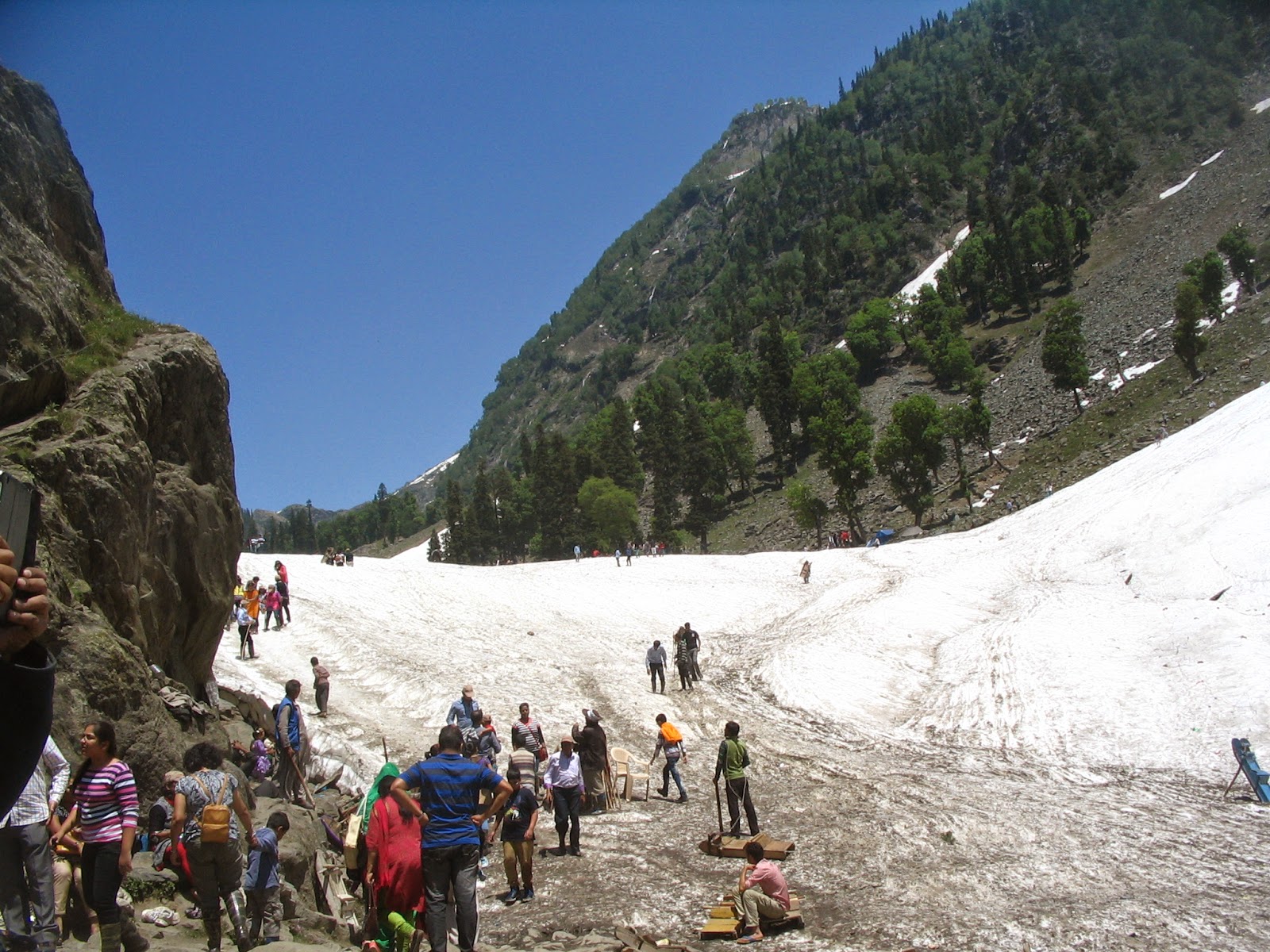
We wait patiently as nothing seems to move. More than an hour later, things improve and slowly we wind our way towards Chandanwari. This little town is the starting point for the traditional route to go to the holy Amarnath cave. It offers magnificent views of the Lidder Valley. We walk up to a hill which is heavily covered with snow that has now turned into ice. Gumboots and sticks are available on rent. So are horses and sledges. You choose how you want to go up the hill and how far. It looks very slushy and slippery at the base. I decide to enjoy the atmosphere at the base itself. We are very close to the snow, and it is pleasant out here, not cold.

Back to the hotel for a very late lunch. After lunch and some rest, we go out shopping in the market that is just outside our hotel. More of embroidered sarees, dress material, shawls, stoles and bags. And dry fruits. Tomorrow, we have an early start to go back to Srinagar.

To be continued.

Monday, June 23, 2014

Kashmir Kaleidoscope

Kashmir is indeed blessed with abundant natural beauty. I was mesmerized by its sights when I toured the state recently. While visiting any new place, apart from the usual sightseeing, I also enjoy looking at the local people and their way of life. Here are some glimpses that I managed to catch during my short exposure to their life.


No matter how breathtakingly beautiful the surroundings are, when you see it everyday, it is just a routine sight. Oblivious of the scenic view, these shikarawallahs prefer to just sit back or take a nap when there are no customers to attend to. At Nagin Lake in Srinagar.


When you drive around Pahalgam in the mornings or evenings, you come across flocks of sheep going for or returning from grazing in the fields. Cars and buses often have to stop to make way for the flocks that are generally huge. Pahalgam is traditionally a shepherds' village. At Aru Valley, Pahalgam.


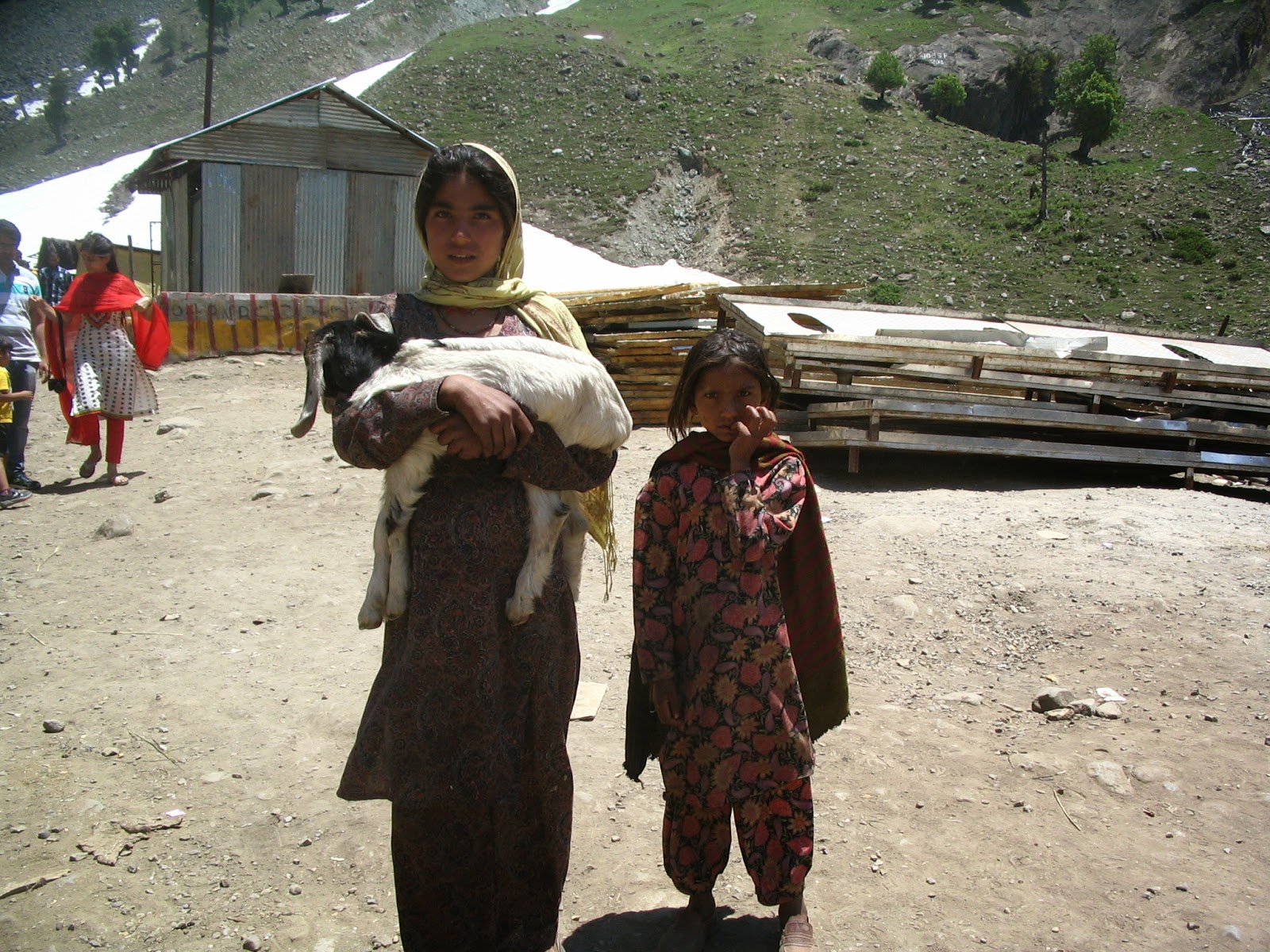
Children carry lambs or goat kids and offer them to you so that you may hold them and get your photo taken with your own camera. All for a few rupees. At Chandanwari, Pahalgam.


When tourists play and frolic in the snow, it is business as usual for horses and their minders. The more customers they get, the merrier. At Chandanwari, Pahalgam.


While the snow-capped mountains are a feast for the eyes, a treat for your taste buds is at hand too. It sure takes a lot of efforts to transport and assemble all these items in this remote place. At Chandanwari, Pahalgam.

The decorated shikaras are for the tourists. The locals use these simple boats for their errands. At Dal Lake, Srinagar.


Boxes full of mouthwatering cherries are irresistible! In Gulmarg.


Schoolgirls about to enjoy an ice cream. In Gulmarg.


Another group of schoolgirls playing in the fresh and cool waters of a stream. They were splashing in the water, throwing water at each other and screaming at the top of their voices. In Tangmarg.


Another day. Another schoolgirl on her way to school against the backdrop of a basket shop. Photo taken from my bus somewhere on the way from Srinagar to Sonamarg.


Guides, drivers and helpers on a wet and cold day trying to get some business. At Bajri Nala, Sonamarg.


This colourful fruit stall was looking quite out of place and somewhat loud in the serene locale. At Fish Tank, Sonamarg.


It looked like a day out for children. The place was full of tourists as well as locals picnicking and having fun. At Fish Tank, Sonamarg.


And wherever there are crowds, there are salespersons peddling the local handicraft. A man enticing a tourist with an embroidered piece of dress material for ladies. The embroidery is bright, eye-catching and exquisite. At Fish Tank, Sonamarg.


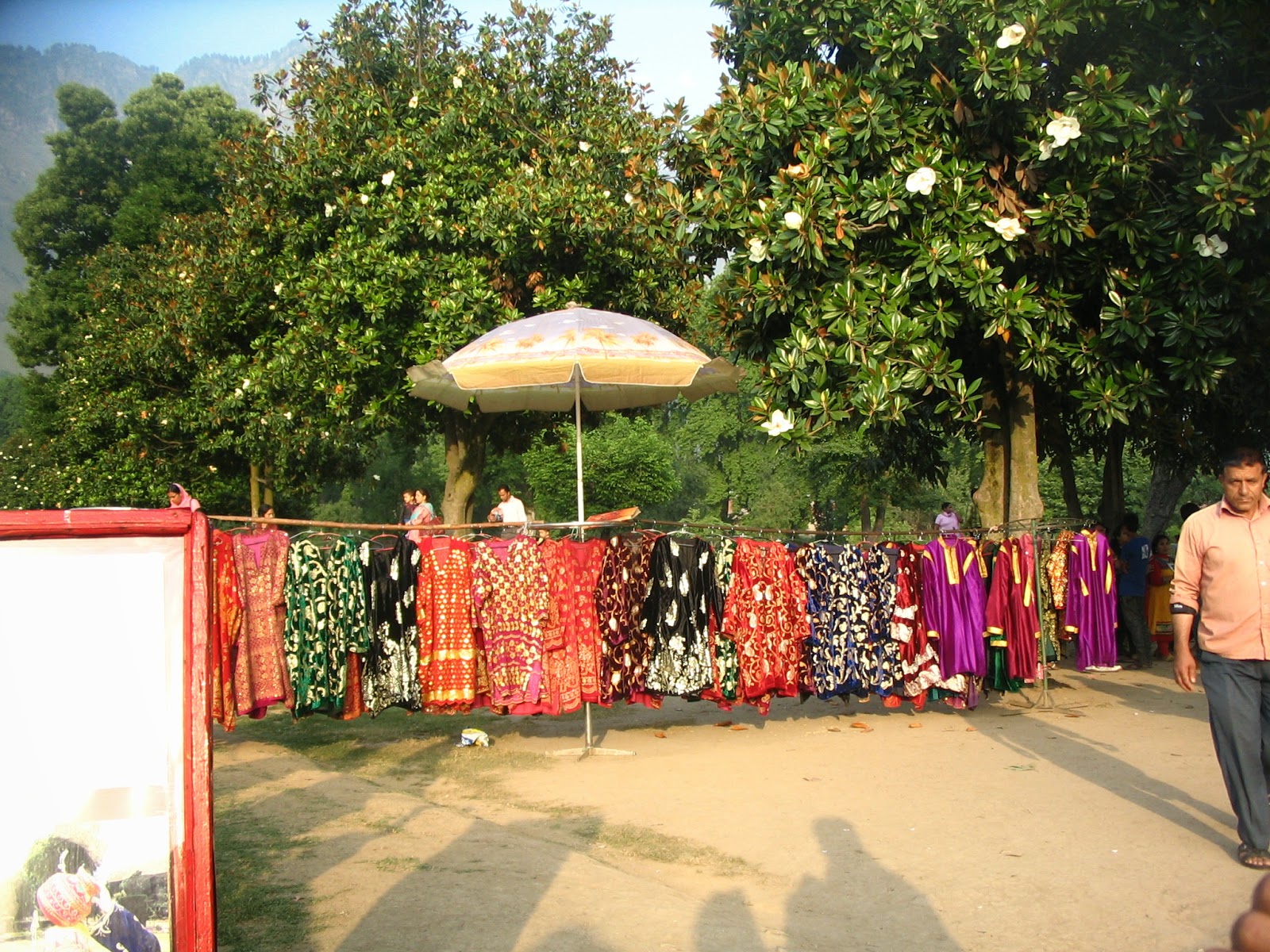
Most women touring Kashmir give in to the persuasion of these people who offer to dress you up in glitzy Kashmiri costumes and take your photograph in them. They are ubiquitous, looking for business in all major tourist attractions. Once the deal is done, the pictures are taken and delivered in super quick time, almost instantly. At Nishat Bagh, Srinagar.


I took this picture from a moving car. Sunset at the Dal Lake in Srinagar.

Sunday, June 1, 2014

Pongal for Brunch!

If you live in Tamil Nadu, you can't stay away from pongal. You don't need to! It is one of the most popular breakfast items, usually served with coconut chutney and sambar. Often a vada is thrown in to make it an irresistible combo...the soft pongal contrasted with the crisp vada. You can alternate between the two, giving your taste buds a rollicking time. Both are spicy, peppered with whole black peppercorns. Ginger and green chillies lend extra zest to them.

At home, we like to have pongal for brunch. It is a wholesome meal. My favourite accompaniments are a crisp roasted papad and a bowl of plain home-made curd. I am happy to share my recipe here. No claims of authenticity, though! I am sure every family has its own recipe with some variations. The ingredients are:

1 cup rice
1/2 cup yellow moong daal
Finely chopped or grated ginger(1-2 teaspoons)
Curry leaves (15-20)
Green chillies (2-3)
Roasted, coarsely ground cumin seeds(1/2 teaspoon)
Whole peppercorns (20-25)
Cashew nuts(10-12)
Ghee(1 tablespoon)
A pinch of asafoetida(hing)
Turmeric Powder(1/4 teaspoon)
Salt


Wash the rice and daal together and drain them nicely. Take ghee in a pan and fry the cashew nuts lightly in it. Keep them aside. Now put some hing,curry leaves, green chillies, peppercorns, finely chopped ginger and turmeric powder in the same ghee and add the washed rice-daal mixture to it. Roast it lightly. Add salt and coarsely ground cumin seeds. Transfer the contents to a pot which goes in your pressure cooker. Add 6 to 7 cups of water to the contents. Cook this in the pressure cooker as you normally cook khichadi. When cooked, garnish it with the lightly fried cashew nuts.

Pongal is supposed to be very soft and mushy. That is why the rice daal mixture:water ratio is 1:4 or 1:5. Enjoy it with your favourite accompaniments!

Thursday, April 10, 2014

"Jal" Does Not Hold Water!

Alert:This write-up contains some spoilers.

Excellent cinematography is surely an asset for a feature film, but it cannot be the film's unique selling point. The makers of "Jal" seem to think otherwise. Their offering is a visual extravaganza, capturing the Rann of Kutch in all its arid glory, while faltering in many other crucial departments. It is hard to put this film in any genre. It gives the impression of being an arty, experimental film. It is anything but that! In spite of having been woven around a fresh, untapped idea, it has ended up being a potpourri of several elements. Greed, deceit, enmity, selfishness, despair, violence, love, lust, humour, music, dance...you name it, and you will find it in the story. The cause of the migratory flamingos is thrown in for good measure too.

The village where most of the action takes place is a mere patch of few ramshackle huts in the middle of nowhere. The inhabitants (all men in dusty off-white and all women covered from head to toe in black cloaks) seem to be doing nothing for a living. They are always outdoors, in groups, practising community living. Where do they do their morning ablutions, where do they get their food from in this barren, uninhabited land are questions best not asked. Instead, see how beautiful the women are in their exquisite ethnic jewellery with designer tattoos on their face, neck and arms. Men too look dashing in their co-ordinated Kutchi outfits. Wait, there is more eye candy. The gori ornithologist (Saidah Jules), saviour of the dying flamingos. She roams around the desert in sleeveless tops and shorts, providing the much needed colour and glamour in the monotonous landscape.

In this setting lives Bakka, our hero whose claim to fame is his extra-ordinary ability to locate water in the sandy expanse around him. The moment he finds a spot, he starts digging. Why fellow villagers don't help him is a mystery. Then there is a comparatively more prosperous dushman gaon, a love triangle involving Bakka, Kesar and Kajri, some good guys, some bad guys, flamingos, drilling machines, camels and water. You get the drift, don't you?

Talking about the actors, Tannishtha Chatterji as Kajri, the spurned lover is very impressive. Wish she had more to do. Kirti Kulhari as Kesar, the belle from the dushman gaon is attractive and adequate. Purab Kohli as Bakka is so swathed under a large turban or long, curly locks of hair that it is difficult to read his expression most of the time. And then there are the accents. It is obvious that not enough work was done on them. Else how does one explain Mukul Dev as Puniya speaking with a Haryanvi accent?

With a taut screenplay and better editing, the story would have been more effective. At times, the plot seems to lose focus and go haywire. What captivates you are the stunning landscapes and the strains of Shubha Mudgal's magical voice in the background. The skies, the clouds, the sun, the sands and the scattered salt glistening like snow look breathtaking.

Singer Sonu Nigam and percussionist Bickram Ghosh have tried their hand at composing for the first time here. They have come up with an interesting mix of Indian and international sounds with a stress on the use of percussion.

This also happens to be director Girish Malik's debut venture. He has shown the courage to come up with an unusual subject. If we take some of the stumbling blocks in this film as teething trouble, maybe we can hope for a better fare from him the next time. 

Friday, April 4, 2014

Queens Of The Silver Screen

It is very easy to see that both "English Vinglish" (my take on it here) and "Queen", released about 17 months apart, are stories of an individual's coming-of-age. Both the films not only did well, but they also managed to strike a chord with the viewers. The fact that protagonists in them happen to be charming, lovable, family-oriented women adds to their appeal.

One is set in Pune, the other in Rajouri Garden, Delhi. One features a docile, duty-bound homemaker who is a loving wife, doting mother of two and a caring daughter-in-law. The other portrays an obedient young woman living a sheltered life with her over-protective family. When circumstances throw them out of their insulated existence (to foreign shores, in both cases), they discover a side of themselves that they didn't know existed. They become new, improved versions of their old selves.

One marked the comeback of yesteryear star Sridevi with a big bang, while the other catapulted young Kangana Ranaut to new heights. Both films are obviously women-centric where men are made to take a back seat. If Shashi in "English Vinglish" rediscovers herself during a trip to the USA, Rani in "Queen" learns to believe in herself while she is finding her feet in Paris and Amsterdam.

Both the stories have been told well and so one can connect with them easily. Interestingly, food makes a delightful appearance in the two films. Shashi is not only a good cook, but she also supplies high quality sweets and snacks at weddings. Rani is the daughter of a prosperous sweet shop owner, loves cooking and takes lessons in the culinary art in Home Science classes in her college.  Elaborate shots of food --both Indian and Continental--make for lovely visuals in both the films.

With so many similarities, what made "Queen" click with the audiences that had appreciated "English Vinglish" earlier? Perhaps the dissimilarities between them worked in its favour? The age of the protagonist, her marital status, circumstances and the kind of things she is exposed to during her journey are markedly different in both the films. While the older leading lady stays within the comfortable environs of her sister's house and comes across mostly "feel good" situations, her younger counterpart faces the rough and tumble of life in an alien atmosphere almost single-handedly. Perhaps the difference in settings and their treatment is the key!

Maybe there is room for a third story where the metamorphosis takes place in India itself! It sure will be interesting to see that. But before that, it is time to stop this rambling!

Wednesday, February 12, 2014

The CEO's Family Celebrates!

The newly appointed Microsoft CEO Satya Nadella's parents refused to entertain any questions from the media. You may read about it here. But it is a different story with Satbir Narela's folks. Read about it here:
 
New Delhi: The newly appointed Microsoft CEO Satbir "Sat" Narela's parents are ecstatic. When this reporter went looking for the residence of Sat's parents in an upmarket neighbourhood in Delhi, she could feel the hustle and bustle almost half a kilometre before she arrived at the sprawling bungalow. The area wore a festive look, with colourful balloons and festoons fluttering in the mild breeze.

A large shamiana had been erected in the lawns of the mansion. At the entrance, some people were dancing to the beats of a dholak. When they realized that this reporter was from a reputed daily with a photographer in tow, they made way for the duo immediately.

Inside, floral garlands hung from the balconies, doors and windows of the house. Electricians were busy hanging series of coloured bulbs to be lit at dusk. Kids in their party clothes were running around, ladies in their finery sat occupying the plastic chairs that had been rented from a local tent house for the day, while men stood here and there in small groups. Some were talking to one another, but most men and women were busy sending messages or chatting to others on their cell phones.

It wasn't difficult figuring out who Sat's parents were. They sat on two decorated chairs, the kind used for the bride and the groom at wedding receptions. As soon as visitors entered the shamiana, they walked up to the couple to congratulate them on their son's success. The couple sat on their thrones beaming, hugging their guests first and putting a laddoo in their mouths later.

This reporter was greeted in the same fashion by Sat's mother. When the formidable matriarch learnt about the purpose of the news team's visit, she informed her husband, whispering aji sunte ho in his ear. He got up from his chair, welcoming this scribe affectionately. He began rattling off his son's achievements right from the kindergarten. He then called out to Ramu Kaka who had been with the family for decades asking him to also get the driver, the cook, the gardener and other help from the house. Soon, so much was being told about the prodigal son that this reporter had a tough time keeping pace with the details.  Everybody wanted to pose for pictures and the photographer went on a clicking spree, capturing different groups in his frame.

When this activity reached a frenzy, the duo could not take it anymore and decided to leave the venue. On their way out, they paused to talk to some guests. Almost everybody they talked to, claimed to be a cousin, friend or teacher of Sat and were eager to tell how close they were to him.

Even the balloonwala outside the gate was not to be left behind. He said he used to bring a balloon for baby Sat every evening!

This is a satire and please take it in that spirit. I do not mean any offence to any community.