Thursday, August 22, 2013

Happy Birthday, Chennai!

Name: Chennai (Madras)
Date of birth: August 22, 1639
Place of birth: The strip of land where Fort St. George stands today

Well, Chennai is supposed to have been founded on this day in 1639 when a piece of land along the coast was bought by the East India Company from the local chieftain. Acquired with a view to get a foothold in their trading activities, they started building a harbour and a fort here. The construction went on for some years and the fort was ready on 23 April, 1644; a day celebrated as St. George's Day in England in honour of its patron saint. Naturally, the fort was called Fort St. George. Soon, it became a centre of mercantile activity, and settlements developed around it. These settlements were the seeds that grew into what we now know as Chennai. As it enters the 375th year of its existence today, its citizens are throwing a big birthday party for their beloved city. Called "Madras Day", the party goes on for almost a month.

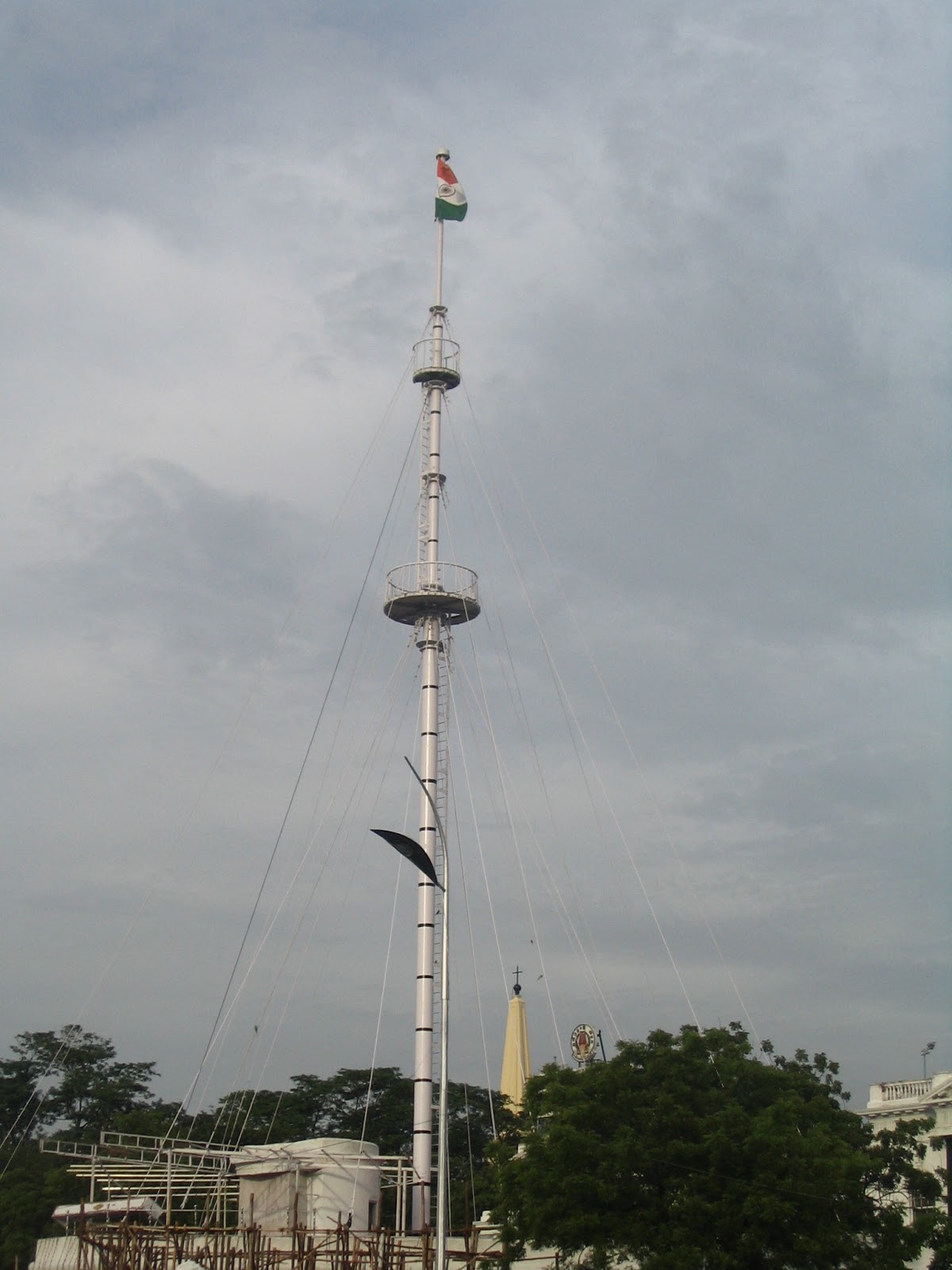
Started in 2004 by a small group of writers, journalists, entrepreneurs and historians, the "Day" consists of a number of events like walks, exhibitions, film shows, online contests, quizzes, bicycle rides and public talks that celebrate the culture, heritage and spirit of Chennai. Many activities in this year's schedule interested me and I participated in one, namely the Fort St. George Heritage Walk. Now, the term "fort" might sound like a misnomer if one goes there expecting the grandeur of some of the best Mughal, Maratha and Rajput forts. Well, the flag post (tallest in the country at 150 ft.) and the moat at the entrance are impressive, but once you step inside, what you see is a cluster of different buildings.

The Cornwallis Cupola is the first thing you notice as you enter. It looks nice and is definitely a photographers' delight. The administrative headquarters of the legislative assembly of Tamil Nadu and the Secretariat are located inside the Fort premises. Many structures are part of military establishment. Then there is St. Mary's Church (built in 1678-1680), the oldest Anglican church in India, Wellesley House, the residence of Robert Clive and the Fort Museum among others. I was there on a Sunday morning, as part of a group led by journalist and publisher Vincent D'Souza. There were not too many people there that day, but I am told the place is bustling with crowds on weekdays...few of them tourists, most visiting the government departments situated inside the Fort. Of course even on a Sunday, the mandatory posse of policemen was there as this is a high security area.

It had rained the previous night when we went there. The streets were punctuated with puddles, but the ancient trees looked fresh and bright. Some of the buildings are maintained well, while some others are dilapidated. Interestingly, some buildings have turned into ruins because of trees growing out of their walls. They must have started as small plants which flourished, eventually eating into the walls. The structures that are still standing are indeed very solid and look good.

We did not enter the church as a service was in progress inside. But we did climb up the wide staircase inside the Clive residence to go up to the wooden-floored banquet hall. It is bare now and one can only imagine the opulence of the banquets that might have been hosted there. The chambers and verandas in this and some of the other buildings have high ceilings supported by tall columns, giving them a stately look. Had to give a miss to the museum as it was not covered in the group's activities for the day, but would like to visit it some other time.

I would think of Fort St. George not as a typical tourist destination, but as a place of interest for those who would like to take a glimpse into the history of Chennai. Meanwhile, the "birthday" celebrations go on. Definitely looking forward to being a part of the events in the future editions of Madras Day!

Thursday, August 8, 2013

A Bridge In A Garden


It is a floral extravaganza. A colourful heaven of natural beauty just an hour away from the bustling metropolis of Paris. We are at Claude Monet's Garden in Giverny. This is where he lived and worked in the later part of his life. A lovely house opening into a wonderful garden. This was built and nurtured by the master himself.

Claude Monet (1840 - 1926), one of the founders of the French impressionist movement, started painting at a time when most artists preferred to paint in a studio. He broke away from this practice by painting outdoors, using Nature itself as his inspiration. This style was called "impressionism", named after his work Impression, soleil levant (Impression, sunrise).  Before his time, it was common for artists to create artworks that were smooth. He began painting with rapid brush strokes. This gave his works their characteristic rough look (when seen from close quarters).


In 1883, he discovered Giverny when the train he was travelling in passed by this little place. Eventually, he moved to Giverny and bought land to build a house and develop a garden. He lived there pretty much for the rest of his life and painted. He painted the same object at different times of the day in different light. So this location not only provided him a comfortable residence, but it also gave him a stimulating environment to work. His property saw some bad times as a result of damage and neglect during the second world war. It was restored over a period of time and thrown open to public. It attracts about 500,000 visitors in the seven months that it is open in a year.


It is a lovely summer day and the gardens are agog with tourists. Many of them are part of groups that have descended from buses, and some like us who have arrived from Paris by train. The green arches lining the path to the house are covered with rose vines. And the whole garden is covered with flowers of different hues.


The house is open, airy and bright, with large windows looking out into the garden. It speaks of the idyllic lifestyle of its residents. All the rooms are done up well, with period furniture and furnishings. The yellow dining room with a huge dining table and the old-fashioned blue kitchen are very warm and inviting. Photography is not permitted in the house, so we do not have any pictures of these charming rooms, but we click to our hearts' content once we are outside in the gardens.


Go to the other side of the road via the tunnel and you find yourself in the water garden.This has been inspired by the Japanese gardens that Monet was familiar with through his collection of prints. This is where the piece de resistance in this complex is located. It is the celebrated green bridge which has been featured in a series of paintings by Monet. It is a small bridge, built across a small pond filled with water lilies. And then there are the weeping willows, and the bamboo grove, more bridges, and of course, the flower beds flaunting blossoms; some rare, some common, but all of them bursting with colour and energy. 

In spite of the presence of hundreds of visitors, the place is serene in its own way. I wonder if it is the collective vitality of all these flowers, the unadulterated natural ambiance, or the wondrous interplay between the water, the flowers, the leaves and the bridges that brings a soothing feel of calm to your senses.

---

For more information on the garden, check this.

Enjoy some more pictures from the garden and a picture of a painting by Monet from the bridge series.


All photos in the garden by Prateek


Wednesday, June 12, 2013

Yeh Kahaani Hai Begaani!

The following is not a review of the recently released film "Yeh Jawaani Hai Deewani". They are some thoughts I had while watching the film. They stayed with me even after the film got over, resulting in this post. Watch out, there are some spoilers!

If the bunch of lead characters in "Yeh Jawaani Hai Deewani" represent the youth of India in any way, it is something to worry about. I sat through the entire 139 minutes, trying to find something...anything that would help me make a connect between the characters and the young people of contemporary India, to no avail.

I know that mainstream Hindi cinema is usually a work of exaggeration, where a largely deprived audience gets to fulfill their fantasies of wearing designer clothes, travelling to exotic locations, shaking a leg with glamorous beauties and skiing down the slopes at some expensive resort. In short, experiencing a lifestyle that is out of their reach. I have no problem with that. If people enjoy living in a world of their dreams for three hours, it is alright.

I know that today's youth are sometimes a confused lot, in search of purpose and direction. They are stressed out, ambitious and willing to pay a high price to achieve their goals. But they are also smart, open and articulate.

What I was aghast at was the portrayal of the young brigade as insensitive, self-centered and arrogant beings who do not take any cognizance of their parents, let alone respect them.  Okay, I realize that we have moved away from the era of the eternally sorrowful mother who stitched clothes for a living, and who had an obedient son falling at her feet crying "maa" every now and then...thank God for that! If this was unpalatable, the other extreme is even more so. For, it is conveying a message that this generation can get away with anything, absolutely anything.

Take Ranbir Kapoor's rude and rough behaviour towards his parents--especially his stepmother--who are waiting for him to return home late at night. Or Deepika Padukone's outburst at her overbearing mother at the dinner table. The poor father doesn't even get to say a single word! And that was the last the mother was seen! Later, as our girl goes through many ups and downs on the emotional roller coaster of her love life, she does not ever need her mother's support to help her cope with the turmoil in her life.

The case of Kalki is no different. She delivers a power-packed performance as an adventurous bohemian young woman, but her parents or guardians are nowhere in the picture. Same is the story with Aditya Roy Kapoor...no parents. All of them go through their lives as individuals with no family, no siblings, no support system, no responsibilities. They are not answerable to anybody; drinking, dancing and making merry with friends to their hearts' content. And following their passion (globetrotting in Ranbir's case) with an alarming single-mindedness.

Whether it was the weak storyline, poorly etched out characters and rambling script lacking focus at times; or the absence of a more well-rounded depiction of the protagonists that got to me more, I'd say it was the latter. We can debate on the matter of films being inspired by society or society being influenced by films. Either way, the warning bells that I heard while watching this film recently were not only loud and clear, but scary too!

Thursday, April 25, 2013

A Slice Of My Childhood Summer

Summer in my childhood. Think of it and you see a kaleidoscope of memories. Two months of carefree holidays when you were not really compelled to do anything. A welcome break from school routine, it was a time when the boundaries between morning, afternoon, evening and night melted into a soft interval of nothingness. Oh,what a happy and colourful nothingness it was...filled with fun, recreation, your favourite books and food. Of course, there was an occasional film to watch and a mandatory visit to your maternal grandparents' place.

But most of the holidays were spent at home in Indore and you looked forward to sleeping on the terrace.The mattresses and sheets that were cool and comfortable at night under a starlit sky, turned dusty and warm as soon as early rays of the rising sun touched them. Sleeping any longer was no option, unless you went indoors and slept under the monotonous drone of a ceiling fan, that is, if you had one. In most houses, the ceiling fan adorned only the living room. You could make up for the lack of sleep by dozing off in the afternoon. The long, languorous afternoons were ideal for a siesta. If you slept on the terrace at night, you needed these midday naps, for your nighttime sleep was often punctuated by the buzzing of a rare mosquito, noisy wedding bands playing late into the night, sounds from a transistor radio coming from your neighbour's terrace, howling of stray dogs or an unexpected rain shower. And then koels' shrill calls pierced the stillness of the skies at daybreak.

Summertime was busy time for the elders. Wheat for the whole year had to be bought and stored safely. One of the rooms at home would be converted into a makeshift granary where quintals of wheat was cleaned before storing it away. A woman was employed especially for this purpose. She would descend with several of her daughters to free the wheat from any impurities like small pebbles and other things. This went on for three or four days. Then the wheat would be filled in sun-dried drums, treated with herbal pesticides and kept in the storeroom.

Raw mangoes appeared in the market which were duly brought home, made into pickles and stored in ceramic jars. The harder and sourer the mangoes, the better suited they were for making pickles. Some were boiled and their extract taken out to make panna, the refreshing, energy-giving drink. Some others were grated or cut into pieces to make murabba, a sweet and sour jam that went well with rotis. All of these were exchanged with the neighbours. The recipe for making these varies in each family, and as a result they taste different.

Then there were papads, stuffed chillies and kurdais to be made and dried in the sun. Kurdais are jalebi-like spirals made from fermented wheat. The process requires hard work, skill and expertise. All this sun-dried stuff is fried and served with a meal to make it spicy..

And then there was sugarcane juice. Temporary sheds were made in each neighbourhood where freshly squeezed sugarcane juice was served with additives like ginger and lemon. A visit to these sheds made for a nice evening outing. Not only was the juice refreshing on a hot summer day, but it was also affordable. Some of the sheds sported private enclosures called family rooms, separate from the common area. Both were furnished with cheap metal or plastic tables and chairs or benches.  One could order a big glass or a small glass. The big glass was often represented by a crude drawing of Amitabh Bachchan on the walls of the shed, while Jaya Bachchan stood there for the small glass. This imagery appeared year after year.

We had fun swinging on the swing in our veranda, playing the simple board game that has been permanently carved on the cement floor at home, eating mangoes, playing in the park behind our house, and reading and listening to stories. A trip to Burhanpur--my maternal grandparents' place--and the prospect of meeting cousins there was a highlight of the holidays. More on Burhanpur in a later post!
Friday, March 22, 2013

Delhi Delights!

Some time ago, I had posted an album featuring some pictures of faces, taken in Delhi. Today, it is a mixed bag of images captured in the streets, malls, parks and markets of the Indian capital in winter. Hope they give you a flavour of the wonderful city.


A mannequin at Dilli Haat in a western ensemble created using handloom fabric. When Dilli Haat opened in 1994, it was known by the more well-known landmark across Sri Aurobindo Marg--the tony INA Market, where one could get rare vegetables like broccoli and asparagus, exotic seafood and meat, and an array of foreign goodies like European cheeses and sauces. Two decades later, the open-air bazaar selling crafts, fabrics and foods from different states of India has overtaken the old market in popularity. Now, INA Market may as well be known as being situated opposite Dilli Haat.

The next two pictures are from Dilli Haat as well.


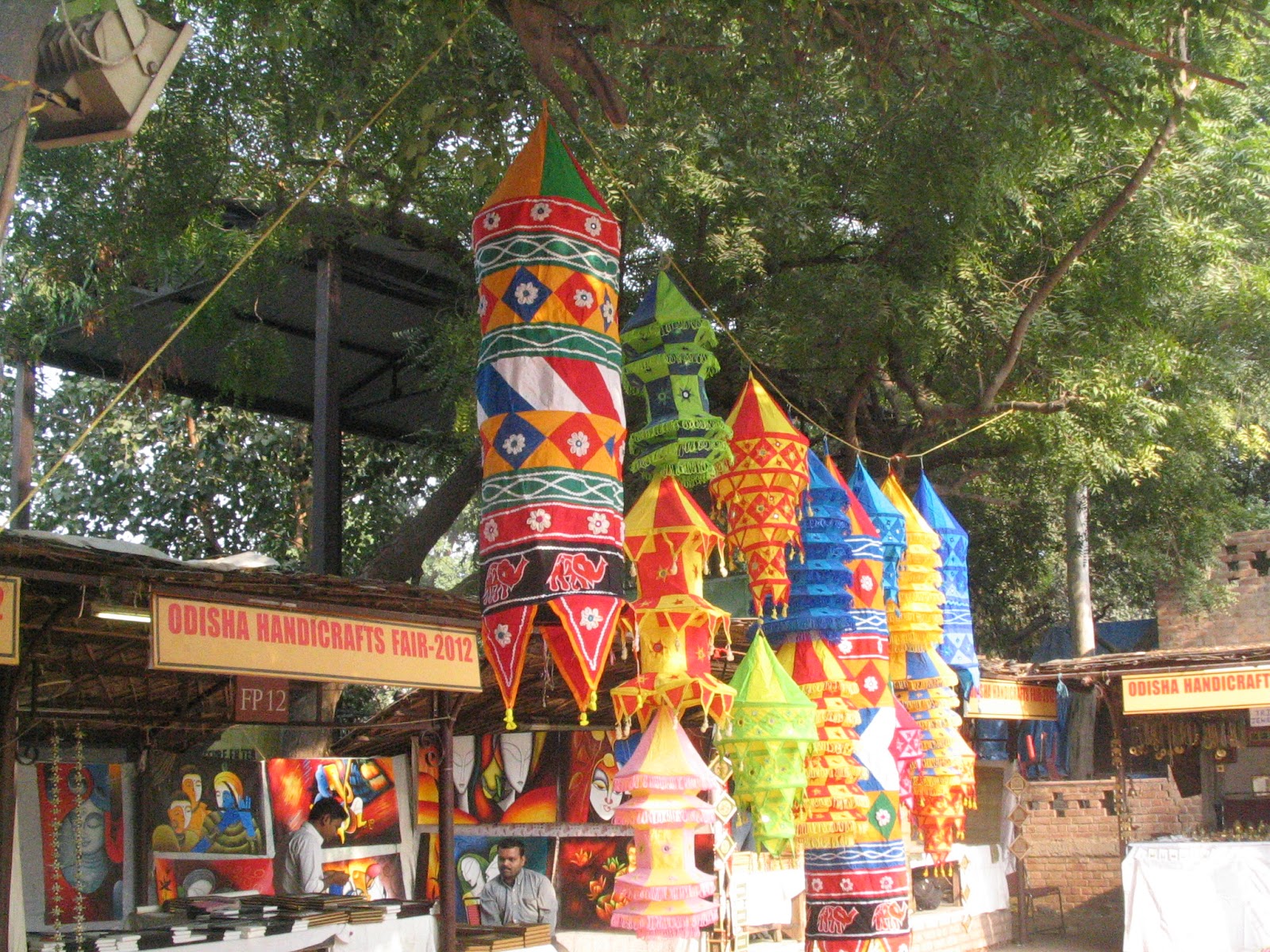
These eye-catching items from Odisha are a sure way to attract visitors to your stall. Handmade from bits of cloth, they can be used to add colour to a dull corner in any space.


More colour! This time in the form of trinkets. These bangles can be mixed and matched to go with your costume.


These seem to have come to the market straight from the farm. Delhi is a heaven for fresh vegetables in winter. They are so irresistible that I always ended up buying more than what I needed when I lived in Delhi.


These mannequins in a South Delhi mall seem to be making a style statement.


One of the small pleasures of living in Delhi for me was to go shopping for pottery. It is contemporary, varied and easy on your purse. Sarojini Nagar Market in South Delhi is one of the places where one can find it spread out on the roadside for sale. The designs and variety have evolved over time. The somewhat rustic and artsy look of this pottery appeals to a wide cross-section of people. Hawkers selling pottery do brisk business throughout the year, although their profit margins might be quite low.


These coffee mugs sure look very inviting.


Ah, the ubiquitous aloo tikki! Another pleasure in Delhi. True, it is available everywhere, but there are connoisseurs who swear by a particular shop where they go to get their fill of this zesty snack. The freshly fried crisp patties of potato smothered with hot, sweet and sour chutneys and topped with boiled chickpeas, grated radish, onions and green chillies bring all your taste buds alive with the first bite. Here, in a popular South Delhi eatery, it is being served in a more hygienic way where you can mix all the ingredients as you like. At other places, when you place an order, the seller mixes the items one by one and gives you a plateful of ready-to-eat tikki. You can even get them made according to your specifications. I like mine to be extra spicy. Doesn't matter how they are served, tikkis always make for appetizing short eats.


If the mannequins in the mall sported western wear, their counterparts in Sarojini Nagar are all aglow in Indian outfits.


No mannequins here! Heavily brocaded wedding sarees on display in a shop window in Chandni Chowk.

Chrysanthemums in myriad shapes, sizes and colours burst on the scene at the onset of winter. Neatly arranged rows of potted chrysanthemums delight one and all in parks and other public spaces. Flower shows and exhibitions are held in the city where hundreds of these beauties bring joy to visitors. I leave you with pictures of roses and chrysanthemums taken at various places in Delhi.


Friday, February 22, 2013

Moving Into A New Place

One would have thought of home as a place where you sleep, cook, eat, relax, entertain guests, keep all your belongings and so on. But wait, it is a lot more. When we live in a comfortable house, we take many things for granted, only to realize the worth of each and every thing when we have to move out of it.

Currently we are looking for a place to rent and have encountered several humorous situations during our hunt. My mental check-list starts ticking the moment we reach the proposed apartment building. Some streets bearing grandiose names such as Judges Avenue turn out to be narrow, dusty lanes where you wonder how your mover's truck will make it should you decide to take up the apartment on offer. Then the parking lot being promised for your car may turn out to be a small open space with hardly any room for manoeuvre, where parking a four-wheeler could be an expert driver's nightmare.

Large complexes and townships often have their own back-up systems for power, but smaller buildings having just a handful of apartments are generally without this luxury. It is in buildings like this that you have to be careful about how high your proposed accommodation is. A third or fourth floor (and anything above it) may become hard to negotiate if there are frequent power cuts when the lift is reduced to a small, dark cubicle incapable of taking you anywhere.

Once the approach road to the apartment, parking space for your car and lift is done with, the person "showing" you the place comes into action. A proud father ushering us into his expatriate daughter's apartment waxed eloquent about the unique doorbell that his darling daughter had installed at her place, and how it could be operated even if there was no power, and how it made different sounds every time it was pressed, and how special it was to her. I was tempted to ask the doting father if this bell even detected the visitors and unlatched the door for them, but didn't get a chance to do so since he had moved ahead in the living room towards the door leading to the balcony.

The mother of an apartment owner recently underlined the grievous absence of a well-defined place to keep your footwear at the doorstep before entering any home and went on to show us a small "teakwood" cabinet which she had thoughtfully placed at the entrance for this purpose. Her friends were aghast that she was giving away such a beautiful piece of furniture for her daughter's tenants, but she was determined in this matter, she said.

Most landlords like to regale their prospective tenants with detailed accounts of how they got some modifications done in their property to make it more suitable to their needs. But in their enthusiasm to show these wonderful amenities to others, they often forget that their needs need not always match with what a tenant is looking for. One such gentleman had disabled a bathroom in his brand-new flat in order to allow the maid to clean utensils there. And this utensil-cleaning-room-which-would-have-been-a-bathroom was opening right into the living room! Another building had a lift which was designed to stop between floors. So, after you get out of the lift, you have about eight steps to climb up or down. A compulsory exercise for compulsive lift-users!

We have had enthusiastic family members of apartment-owners insist that we take a look under the washbasin in a bathroom and see how cleverly they have made provisions for hiding the mop and the bucket there. A certain gentleman was ecstatic about the master bathroom being equipped with two washbasins, his and hers! They go about opening cupboards under the kitchen platforms displaying revolving racks for keeping bottles, drawing your attention towards the mirror that suddenly appears when one opens a cupboard in the bedroom, and opening the taps in various sinks and washbasins to assure you about the "abundant" water supply. A loving mother even pulled out pictures of her daughter's and son's families who had chosen to reside in distant lands, entrusting their aged parents with the task of taking care of their investments and property in their hometown.

However amusing these stories might be, I do realize that they are sincere efforts on the part of homeowners and their families to find a good tenant for their property ( salaried people with small families are often the most coveted tenants). It is as important for an owner to find a good tenant as it is for a tenant to find a good place. And if one can strike a deal without a broker, it is ideal given that brokers charge a month's rent from both the parties. What kind of deal we ultimately strike remains to be seen.

Friday, January 18, 2013

A Date With Fossils


I chanced upon a little-known place during a visit to Pondicherry recently. The National Fossil Wood Park at Thiruvakkarai in Tamil Nadu is located just 20 kilometers from Pondicherry. It was clear that the park is not frequented by too many people. We had to stop a couple of times to ask some locals for directions before we finally made it there. A small blue board bears the name of the park. The park is small too. Actually, the fossils are scattered over 247 acres, but only a small portion is accessible to visitors. Strewn across the park are wood fossils of various shapes and sizes.They range between three and 15 meters in length and up to five meters in girth. And what is amazing is that these fossils are some 20 million years old!


They look as if they were dried trunks of trees, woody and complete with concentric rings. But you are in for a surprise when you touch them. They feel exactly like stone. Once upon a time, they had been trees. They turned into rock when their organic material got replaced with silica. This process of petrification usually takes place underground, when the wood gets buried under sediment. Lack of oxygen prevents it from getting decomposed. Now, if mineral-rich water flowing through the sediment deposits minerals in the plant's cells, the plant tissue turns into stone gradually. And so here they are...relics from the past...rarest of rare links connecting us with something that existed on this earth several millenniums ago. This unique baggage of history makes the fossils truly special.


Scientists' view is that these trees did not originally grow here. They were transported to this location before their petrification. According to folklore, they are the broken bones of a demon who was defeated by Lord Vishnu in a combat. Whether one believes this or not, what strikes one is the general feeling of apathy towards this park. It comes under the Geological Survey of India and it would be ideal if they could maintain and promote it for tourists as well as students. A trip to the park could be an interesting and educational excursion, if it is made more visible amongst the well-known sites in this area.


Other prominent fossil wood parks in India are: Akal Fossil Wood Park in Jaisalmer and National Fossil Wood Park, Sattanur, also in Tamil Nadu.

All photos by Lata

That was just a parting shot taken before leaving the park.