I visited the Madhya Pradesh Tribal Museum in Bhopal
recently. And I was very happy that I did. Inaugurated on June 6, 2013,
this lovely space offers a glimpse into the lives of various tribes of
this diverse land. The entire museum is a work of art. The exhibits are
simple everyday items used by the tribal people, but each and every one
of them exudes beauty.

From the outside, the museum resembles a huge thatched hut. The tall walls are adorned with large wooden murals depicting life along the river Narmada. The museum is divided into six sections: Cultural Diversity, Tribal Life, Tribal Aesthetic, Tribal Spiritual World, Guest States and Exhibition Gallery. Once you buy your ticket and start exploring, you feel as if you were in a tribal wonderland.

Dwellings made with clay, bamboo, mud, grass and leaves are not only pleasing to the eye, but they also tell you about the lives of their inhabitants. One gets a peek into how they keep their cattle, how important their courtyard is to them, how they store their food grains. A mammoth food grain container dominates the view in one of the sections. The array of cooking vessels and accompanying stuff makes for interesting viewing too.
 In another section the exhibits focus on their wedding rituals,
jewellery, combs, birth and death rituals, farming, singing and dancing,
costumes and other things. A gigantic bangle is the centre of
attraction in one of the halls. It is a replica of a bangle that is
given to the new bride while welcoming her into her marital home.
Symbols of productivity like a pair of ploughing bullocks, farmer, field
are ingrained on this bangle and the bride is supposed to keep this
with her as a lucky charm while preparing seeds.
In another section the exhibits focus on their wedding rituals,
jewellery, combs, birth and death rituals, farming, singing and dancing,
costumes and other things. A gigantic bangle is the centre of
attraction in one of the halls. It is a replica of a bangle that is
given to the new bride while welcoming her into her marital home.
Symbols of productivity like a pair of ploughing bullocks, farmer, field
are ingrained on this bangle and the bride is supposed to keep this
with her as a lucky charm while preparing seeds.
Music is an important part of tribal life. A mind-boggling variety of drums, string instruments, wind instruments and others occupy pride of place in a hall.
The tribal people have their own belief system, their own deities and their own symbols. A pillar, stone, stick or flag are often their objects of worship. The section showcasing their spiritual world could be called the most abstract amongst all since it is indeed hard to conceptualise.

The guest state featured presently is Chhattisgarh. It was a part of Madhya Pradesh until it was carved out of it on November 1, 2000 to be made a separate state. There is a large tribal presence in this state. The tribal homes featured here are simply awesome because of their pretty lattices made with bamboo and clay.
The exhibition gallery opens out before us the world of games played by tribal children. Their games need minimal or no objects, but they are designed cleverly towards making the players physically and mentally strong. It is amazing how many types of games they play inside or outside their homes. This gallery has real photographs as well as models of kids playing a particular game. A short description of the game is displayed too. An interesting and rather unique presentation!
Gond, Bheel, Korku, Baiga, Sahariya, Kol, Bhariya...terms that were just obscure names for us suddenly start making sense once you see--even if fleetingly--how they live their lives in the lap of nature, how well-developed their aesthetic sense is and how intelligently they devise ways to make the best of their minimalist surroundings.
Any downside? Well, the space may look too bright and a bit kitschy to some. That could be because it is still quite new and too many exhibits are on display, crowding the halls and the galleries. But it does bring together many aspects of tribal life under one roof.
---
On a different note...when I was there, a big group of men, women and children had descended on the museum. They were not only loud and indisciplined, they showed utter disregard for the exhibits by touching them, scrambling around them for getting pictures taken, passing comments inanely, running, climbing and in general making a nuisance in the otherwise quiet halls. The museum attendants did request them to be silent or speak softly, but their polite pleas fell on deaf ears. It was only after the group had left that peace returned to the museum.

From the outside, the museum resembles a huge thatched hut. The tall walls are adorned with large wooden murals depicting life along the river Narmada. The museum is divided into six sections: Cultural Diversity, Tribal Life, Tribal Aesthetic, Tribal Spiritual World, Guest States and Exhibition Gallery. Once you buy your ticket and start exploring, you feel as if you were in a tribal wonderland.
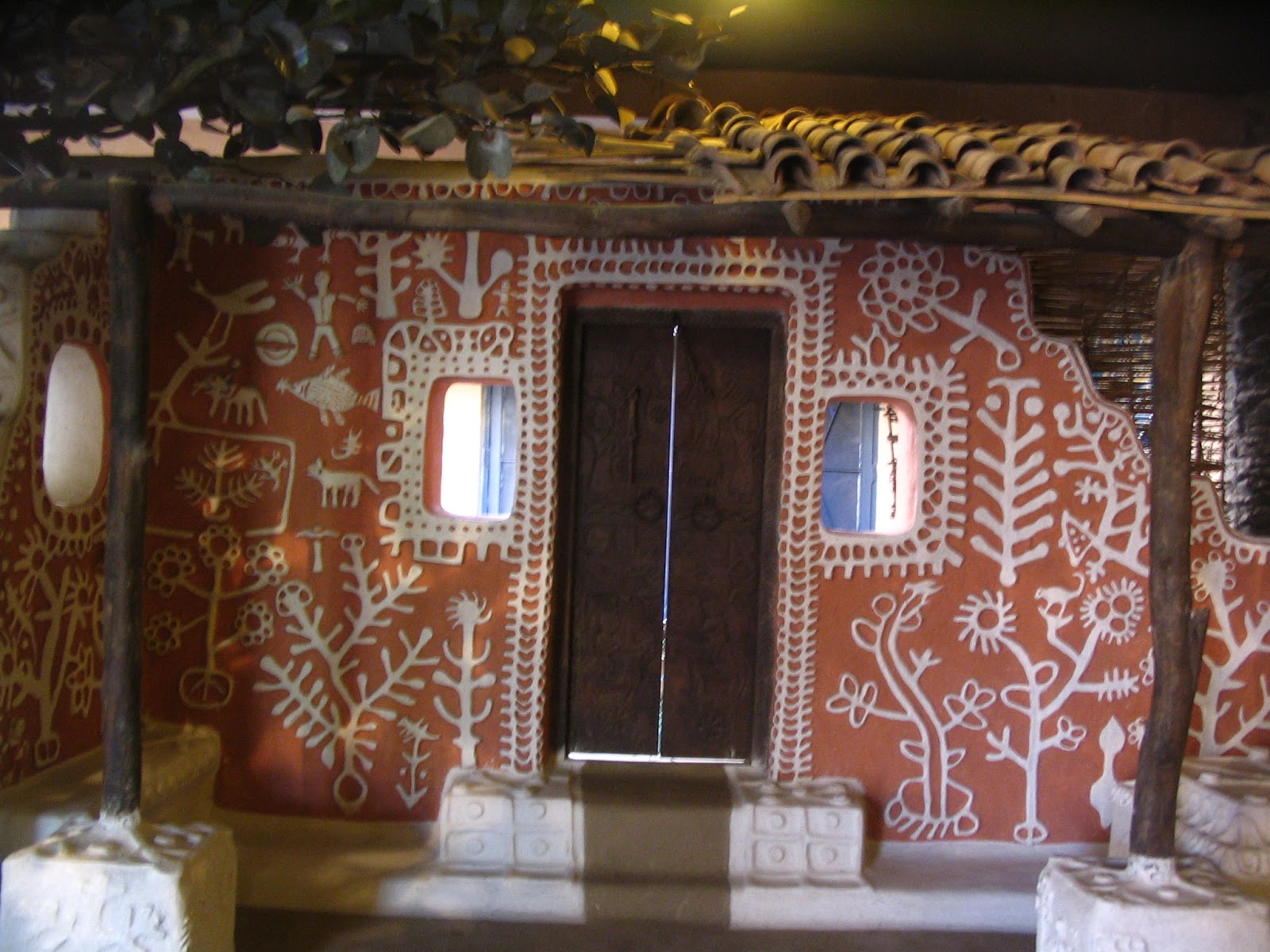
Dwellings made with clay, bamboo, mud, grass and leaves are not only pleasing to the eye, but they also tell you about the lives of their inhabitants. One gets a peek into how they keep their cattle, how important their courtyard is to them, how they store their food grains. A mammoth food grain container dominates the view in one of the sections. The array of cooking vessels and accompanying stuff makes for interesting viewing too.

Music is an important part of tribal life. A mind-boggling variety of drums, string instruments, wind instruments and others occupy pride of place in a hall.
The tribal people have their own belief system, their own deities and their own symbols. A pillar, stone, stick or flag are often their objects of worship. The section showcasing their spiritual world could be called the most abstract amongst all since it is indeed hard to conceptualise.

The guest state featured presently is Chhattisgarh. It was a part of Madhya Pradesh until it was carved out of it on November 1, 2000 to be made a separate state. There is a large tribal presence in this state. The tribal homes featured here are simply awesome because of their pretty lattices made with bamboo and clay.
 |
| Photos by Lata |
The exhibition gallery opens out before us the world of games played by tribal children. Their games need minimal or no objects, but they are designed cleverly towards making the players physically and mentally strong. It is amazing how many types of games they play inside or outside their homes. This gallery has real photographs as well as models of kids playing a particular game. A short description of the game is displayed too. An interesting and rather unique presentation!
Gond, Bheel, Korku, Baiga, Sahariya, Kol, Bhariya...terms that were just obscure names for us suddenly start making sense once you see--even if fleetingly--how they live their lives in the lap of nature, how well-developed their aesthetic sense is and how intelligently they devise ways to make the best of their minimalist surroundings.
Any downside? Well, the space may look too bright and a bit kitschy to some. That could be because it is still quite new and too many exhibits are on display, crowding the halls and the galleries. But it does bring together many aspects of tribal life under one roof.
---
On a different note...when I was there, a big group of men, women and children had descended on the museum. They were not only loud and indisciplined, they showed utter disregard for the exhibits by touching them, scrambling around them for getting pictures taken, passing comments inanely, running, climbing and in general making a nuisance in the otherwise quiet halls. The museum attendants did request them to be silent or speak softly, but their polite pleas fell on deaf ears. It was only after the group had left that peace returned to the museum.


